Artificial Intelligence is significantly altering the landscape of various industries. Its applications enhance efficiency and improve decision-making across sectors. In healthcare, for instance, AI aids in diagnostics and administrative tasks. Meanwhile, finance leverages AI for market analysis and fraud detection. As these transformations unfold, the implications for innovation and adaptability are profound. The question remains: how will these advancements shape the future of industries still to embrace AI?
The Impact of AI on Healthcare
As the healthcare industry grapples with increasing demands for efficiency and improved patient outcomes, artificial intelligence (AI) has emerged as a transformative force.
See also: prono-choc
AI Innovations in Finance
The integration of artificial intelligence in various sectors showcases its versatility, with the finance industry being a prominent example of its transformative potential.
AI innovations enhance automated trading, allowing for rapid decision-making and increased market efficiency.
Additionally, advancements in fraud detection leverage machine learning algorithms to identify anomalies, significantly reducing financial crime.
This evolution empowers institutions, fostering a more secure and dynamic financial landscape.
Transforming Retail With AI Technology
Numerous retailers are harnessing the power of artificial intelligence to revolutionize their operations and enhance customer experiences.
By implementing AI-driven personalized shopping solutions, businesses can tailor recommendations to individual preferences, fostering deeper customer engagement.
Additionally, advanced inventory management systems optimize stock levels and forecasting, ensuring efficiency.
This integration of AI not only streamlines processes but also empowers retailers to meet evolving consumer demands effectively.
The Future of AI in Manufacturing
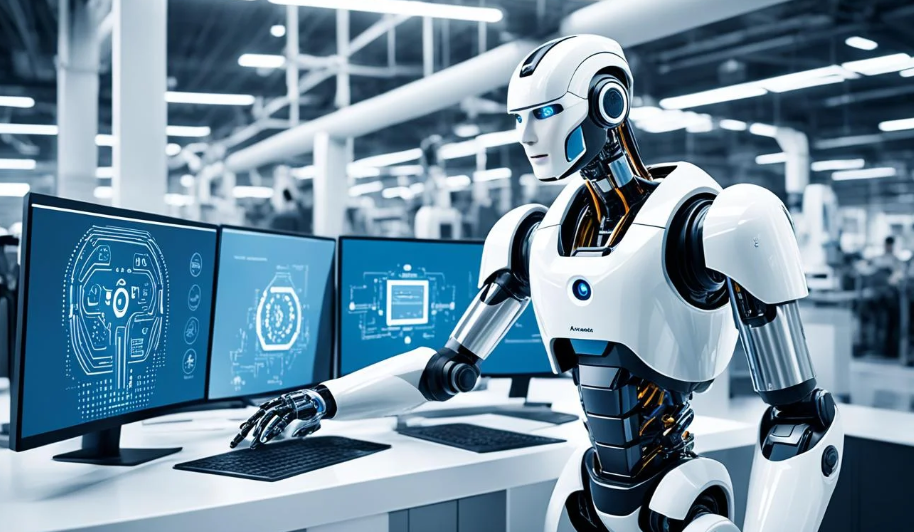
A significant transformation is on the horizon for the manufacturing sector, driven by advancements in artificial intelligence.
The rise of smart factories will revolutionize production processes, enabling real-time data analysis and automation.
Predictive maintenance will enhance equipment longevity and efficiency, reducing downtime and costs.
As AI continues to evolve, it promises to foster innovation and adaptability, empowering manufacturers in an increasingly competitive landscape.
Conclusion
As the dawn of artificial intelligence unfolds, industries are illuminated by its transformative glow, much like a sunrise breaking through the horizon. In healthcare, finance, retail, and manufacturing, AI acts as a guiding star, enhancing efficiency and fostering innovation. This technological revolution not only streamlines operations but also weaves a tapestry of adaptability, enabling organizations to navigate the ever-changing landscape with agility and foresight. The future, painted in vibrant hues of possibility, promises a dynamic world powered by intelligent solutions.